TruthFinder is a legitimate company, not a scam. But it is not the "real background check" its marketing implies, its reports are frequently wrong, and the FTC has already ordered it to stop overstating what it finds. If you're asking "is TruthFinder legit" because you just found your own name, address, and relatives listed there, the short version is: the company is real, the data about you is real enough to be a problem, and you have the right to remove your profile for free.
Here's the longer version: what TruthFinder actually is, where the scam accusations come from, what the law says, and how to get yourself off it.
What TruthFinder actually is
TruthFinder is a subscription people-search site owned by PeopleConnect, the same company that operates Intelius, Instant Checkmate, and US Search. All four sites draw on the same pool of data: public records like property deeds, court filings, and voter registrations, blended with purchased marketing data and scraped web content, then packaged into a "background report" keyed to a person's name.
That's why your profile exists there without your permission. Nobody hacked anything and nobody asked you. TruthFinder assembled your listing from records that are individually public and legally purchasable. The product it sells is the aggregation: one search that pulls your address history, phone numbers, relatives, and possible court records into a single report.
Is TruthFinder a scam?
No. You will get a real report if you pay for one. The scam accusations mostly trace back to three things, and each has some substance behind it.
The teaser results oversell what the report contains. In September 2023, the FTC ordered TruthFinder and Instant Checkmate (both PeopleConnect sites) to pay $5.8 million over charges they deceived users about background report accuracy and violated the FCRA. Per the FTC, marketing emails and push notifications claimed a search subject had a criminal or arrest record when the underlying record was sometimes just a traffic ticket, all while the sites touted "the most accurate information available to the public." If a "RESULTS FOUND" banner once scared you into a subscription, that's the practice regulators penalized.
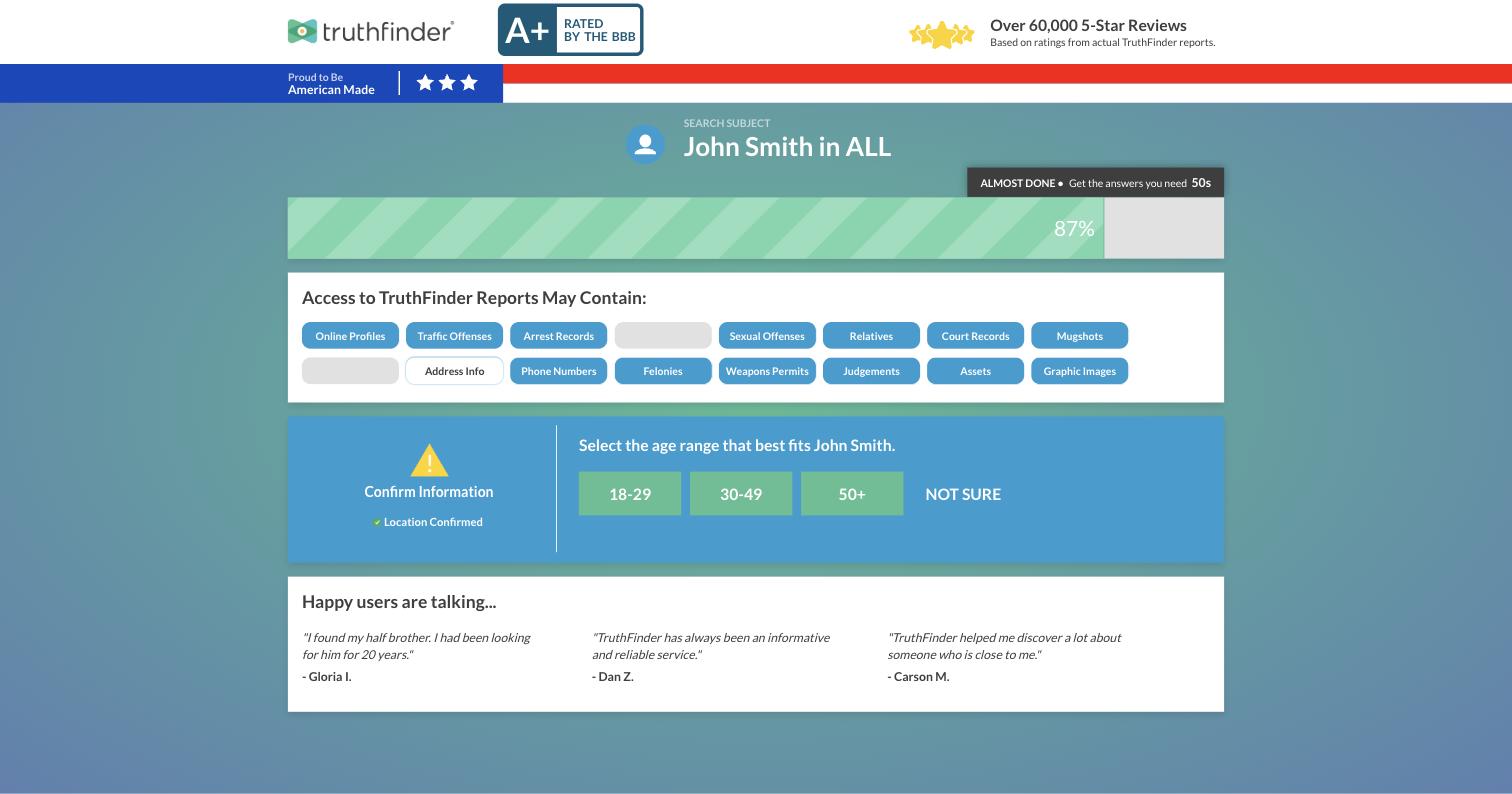
The search experience is theater. When we walked TruthFinder's search funnel ourselves while building our removal coverage, the multi-minute "scanning databases" progress bar crawled on, its badges teasing mugshots, felonies, and sexual offenses, long after every question we'd been asked was answered. The dramatic scan doesn't reflect real search work; it builds anticipation before the paywall.
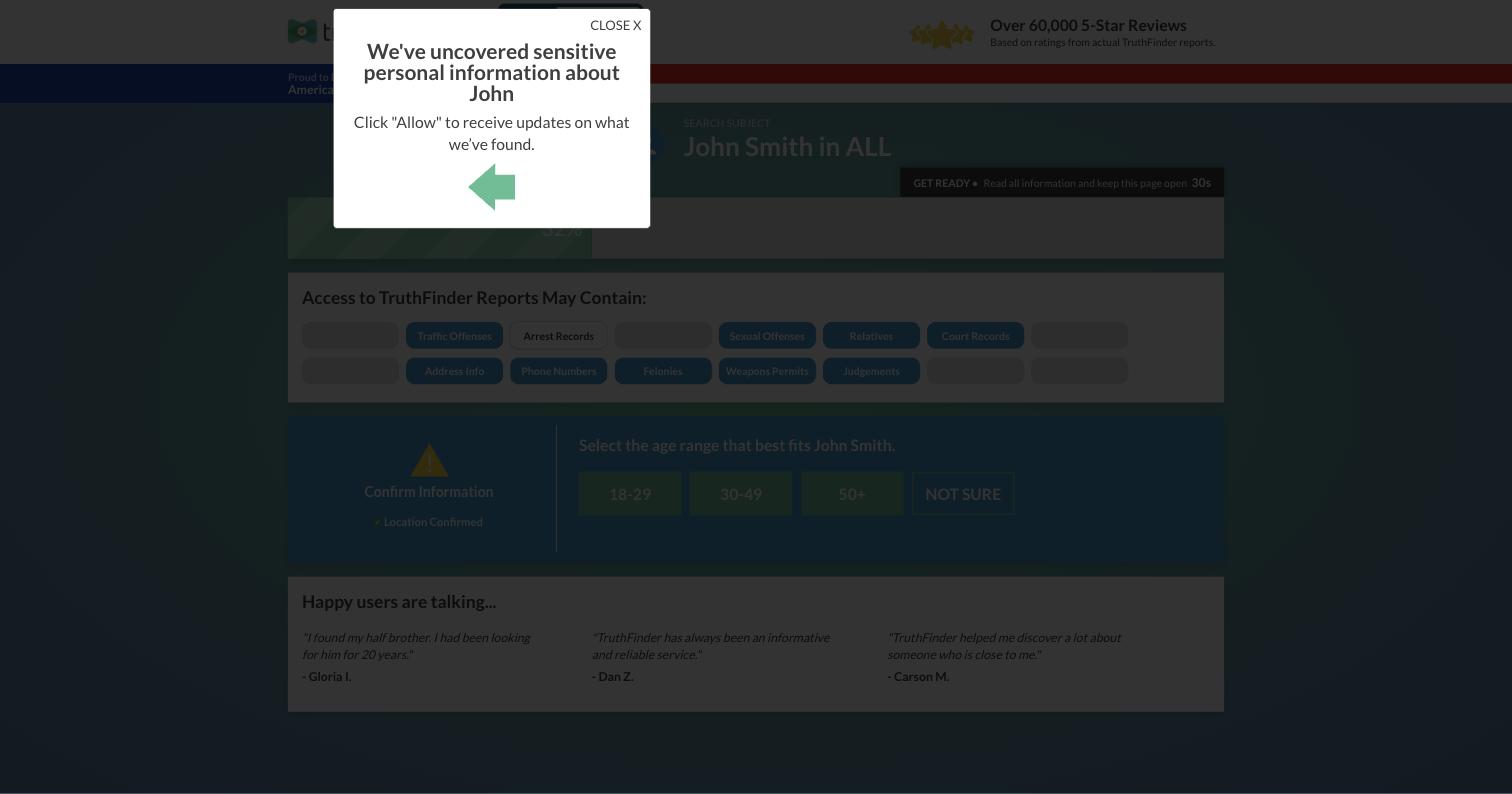
Along the way, a pop-up claimed the scan had already "uncovered sensitive personal information" about our generic John Smith (thirty seconds into a search on nothing but a name) while asking us to enable browser notifications so it could keep the updates coming.
The subscription renews until you cancel it. TruthFinder is a recurring subscription, and a steady stream of complaints comes from people who signed up for one search and were billed monthly afterward. That's disclosed in the fine print, but it catches people out often enough to fuel the "truth finder scam" searches. If you subscribe, note the renewal date and cancel through your account settings, not by just deleting the app.
Is TruthFinder legal?
Yes, with one boundary that matters more than any other fact on this page. TruthFinder declares itself not a consumer reporting agency, and its reports cannot legally be used for employment screening, tenant screening, credit decisions, insurance eligibility, or anything else covered by the Fair Credit Reporting Act. In fact, the very first thing the site shows any visitor is a full-page notice making you certify exactly that before you can search.
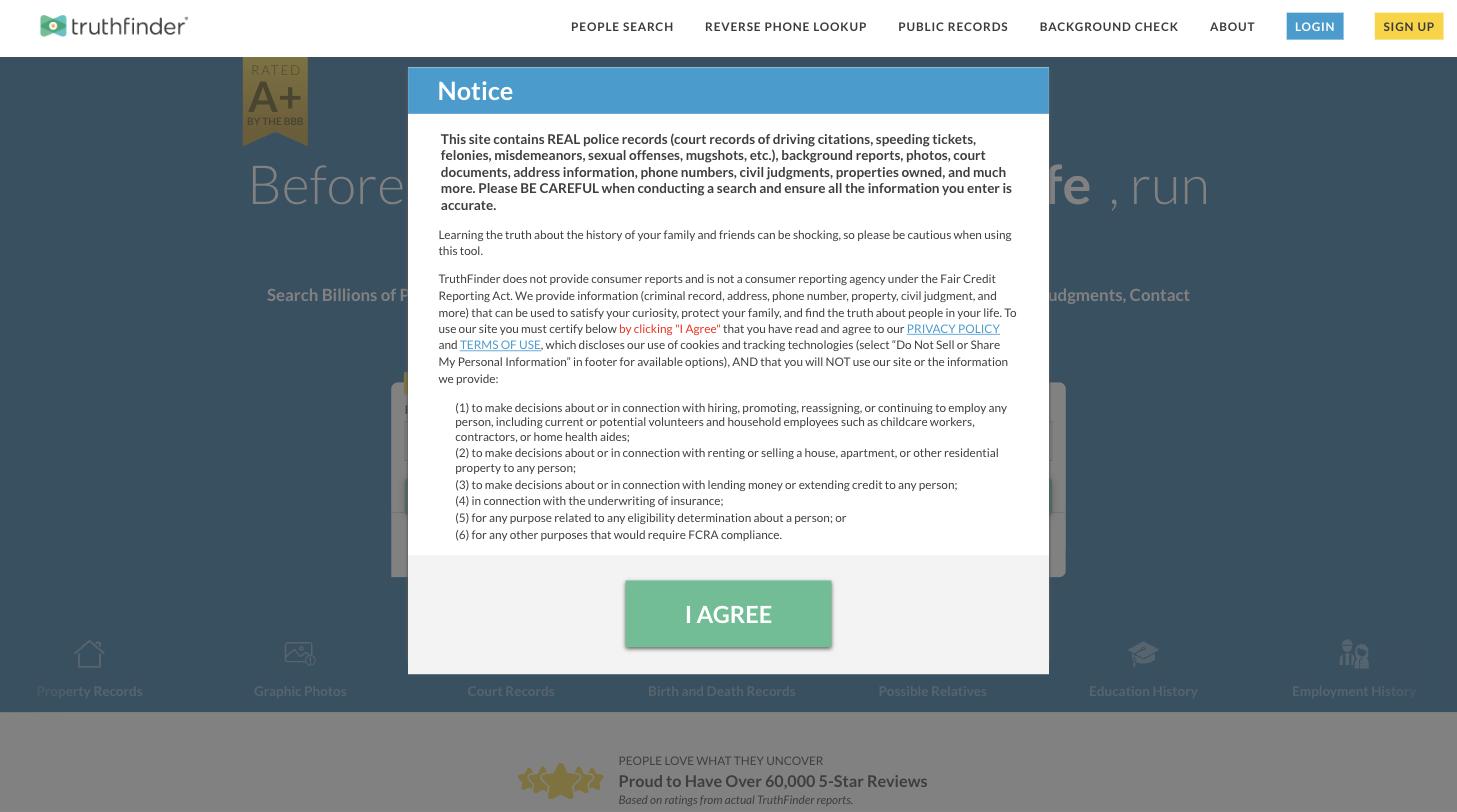
Notably, the FTC's 2023 complaint charged that despite that disclaimer, the sites had marketed reports for exactly those screening purposes, which is part of what the $5.8 million settled.
This cuts both ways:
- If you're thinking of using it to vet a job candidate, a babysitter you'll formally employ, or a tenant: don't. Using a non-FCRA report for an FCRA-covered decision is a federal violation, and it's on you, not TruthFinder.
- If you're worried about being on it, the disclaimer is precisely what lets TruthFinder sell a background-check-shaped product with none of a real background check's accountability. Anyone with a subscription can pull your report, for any reason, with no permissible purpose required.
How accurate is TruthFinder?
Mixed at best. TruthFinder's reports are automated merges of records matched by name, and common names collide: reports routinely mix in addresses you never lived at, relatives who aren't yours, or court records belonging to someone with the same name in another state.
Because it isn't a consumer reporting agency, you also have no dispute rights. An error on your credit report comes with a legal process to fix it; an error on your TruthFinder report comes with nothing. The only lever you have is removing the whole profile.
Is TruthFinder.com real, and is it safe to use?
The site is real, the company is real, and paying it won't steal your card details: PeopleConnect is a large, registered US data broker, not a phishing operation. "Safe" is a different question for the person being searched: your TruthFinder listing exposes your address history, phone numbers, age, and family connections to anyone curious enough to pay, which is exactly the raw material used for stalking, doxxing, and scam targeting. If that concerns you, removal is the fix.
How to remove yourself from TruthFinder
TruthFinder doesn't run its own opt-out form. Removal goes through PeopleConnect's shared Suppression Center, and one completed request suppresses your record across all four PeopleConnect sites at once: TruthFinder, Intelius, Instant Checkmate, and US Search.
The short version: verify your email, enter your name and date of birth, pick your record from the matches, verify your identity a second time, and set the record to "Suppressed." Suppression is commonly reported to take effect within about 48 hours, though PeopleConnect doesn't publish a turnaround. Our step-by-step TruthFinder opt-out guide walks every screen, including the one place the form warns you it can't be undone.
Two caveats worth knowing before you start. Suppression covers only the PeopleConnect network. Spokeo, BeenVerified, Whitepages and the rest are separate companies with separate opt-outs. And suppression stops your current record from displaying; a new address or newly ingested record can generate a fresh listing later, which is why re-listing makes removal a recurring chore rather than a one-time fix.
Frequently asked questions
Is TruthFinder legit for background checks? It's a legitimate company, but it is not a legal background check. For hiring, tenant screening, or any official decision, you need an FCRA-compliant consumer reporting agency. TruthFinder explicitly disclaims that use.
Is TruthFinder free? No. The search is free, but viewing any report requires a paid subscription that renews automatically until cancelled.
Does TruthFinder notify someone when you search them? No. Searches are anonymous to the person being searched, which is part of why being listed is uncomfortable in the first place.
Why does TruthFinder have my information? It aggregates public records, marketing data, and scraped web content. Your listing was assembled without your knowledge or consent, which is legal — and so is demanding its removal.
Does removing yourself from TruthFinder remove you from Intelius and Instant Checkmate? Yes. All four PeopleConnect sites share one suppression system, so a single completed request covers them together.
Will my TruthFinder listing come back after I remove it? It can. Suppression blocks the record you selected, but new data ingested under your name can create a fresh listing. Recheck every few months.
Keeping watch is the part nobody has time for — and it's what Delist My Data is built to automate: filing the removal, then re-checking TruthFinder and the rest of the people-search sites and re-filing when your data reappears, without you having to remember to look. We're in pre-launch now; join the waitlist for founding-member access as we bring it online.